
THERE is something troubling in the way we have learned to speak of nations.
We admire those that prosper. We measure success in wealth and influence. And when a nation falls upon difficult times, we are often quick to judge it.
We see its poverty, but not always the wealth once extracted from its soil. We see its instability, but seldom ask what forces shaped its institutions. We see where a nation stands today, but not necessarily the long and difficult road that brought it there. Yet a nation’s present circumstances are not the measure of its worth.
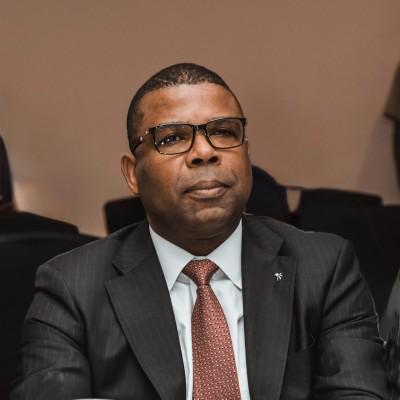
I write these words as Haiti’s Ambassador to South Africa, two countries separated by an ocean, yet connected by histories that speak to humanity’s deepest struggles.
Today, as Haitians begin a period of remembrance honouring those who have departed, my thoughts turn also to the generations whose sacrifices shaped our nation. In a little over two weeks, on 18 November, we will commemorate the Battle of Vertières: one of the most consequential, yet insufficiently appreciated, victories in the history of human freedom.
There is something fitting about this convergence of remembrance and history. Both invite us to consider what we owe those who came before us, and what we must leave to those who will follow.
Before the world judged Haiti, Haiti changed the world
On 18 November 1803, near Cap-Français, an army composed largely of men who had once been enslaved confronted the forces of one of the most powerful military powers of its time. They were not fighting to conquer distant lands. They were fighting for the right to belong to themselves.
Under Jean-Jacques Dessalines, and with the extraordinary courage of commanders such as François Capois, nicknamed Capois La Mort, they prevailed. Seven months earlier, General Toussaint Louverture had died in captivity, far from the land whose destiny he had helped reshape. He never witnessed the final victory. But the struggle outlived him.
On 1 January 1804, Haiti proclaimed its independence.
At a time when much of the world still regarded the enslavement of Africans as lawful and compatible with civilization, a people whom the prevailing order had treated as property defeated the forces sent to subdue them and established a sovereign nation.
People who had been bought and sold, whose labour had generated immense fortunes, whose families had been torn apart, and whose humanity had been denied, had asserted their right to determine their own future.
Haiti did not bring an immediate end to slavery elsewhere. But it demonstrated something that could never again be entirely denied: the enslaved could free themselves. The supposedly powerless could defeat the powerful. And those whom history had been written to exclude could become the authors of history itself.
That was one of Haiti’s greatest contributions to humanity. Its significance endures to this day.
The history we cannot afford to forget
To understand Haiti’s journey, we must also confront the conditions from which the nation emerged.
We must remember the men, women and children taken from African communities, transported across the Atlantic and condemned to lives of forced labour. We must remember families torn apart, bodies violated, and human beings killed for resisting a system that denied their humanity. And we must not forget those who perished during the Middle Passage, whose names disappeared into the ocean while the wealth produced by the survivors accumulated elsewhere.
These are difficult truths. But history was far more difficult for those who lived it.
It is worth recognizing that the prosperity of some societies and the deprivation of others did not always emerge independently of one another.
Nor did independence immediately erase the consequences of exploitation. In 1825, more than two decades after declaring its independence, Haiti was compelled, under the threat of military force, to accept an enormous financial indemnity as the price of recognition by its former colonial ruler. The indemnity was intended to compensate former colonists for losses arising from independence, including the loss of people they had once claimed as property.
Those who had endured enslavement were required to compensate those who had profited from it. The financial burden, compounded by borrowing, constrained Haiti’s resources for generations.
This history matters. Not because it explains every difficulty that followed; it does not. Haiti’s journey has also been shaped by political instability, periods of national division, institutional challenges, external pressures and devastating natural disasters. These realities are part of our national experience and call for an honest understanding of the past, together with a shared commitment to the future.
To understand a nation’s present circumstances, we must consider both the historical forces that shaped its possibilities and the responsibilities that belong to each generation.
History does not require us to inherit the guilt of those who came before us. It asks us to understand what occurred, recognize the consequences that endure, and approach one another with the honesty and mutual respect upon which more just relationships can be built.
An ocean apart, a familiar struggle
There is particular significance in reflecting upon these questions from South Africa.
This country knows what it means to have one’s humanity questioned by law. It knows the humiliation of racial classification, the cruelty of forced removals, the denial of political rights, and the imprisonment of those who dared to demand equality. It knows Sharpeville. It knows Soweto. It knows Robben Island.
And it knows the sacrifices of countless others whose names may never appear in history books: the mothers who waited for children who never returned, the fathers who worked on land they could not own, the students who entered streets where bullets awaited them.
South Africa’s democracy did not emerge from comfort. It emerged from generations of sacrifice, resistance, negotiation and an extraordinary determination to imagine a different future.
When South Africans voted in their first democratic national elections in April 1994, the world witnessed a nation choosing to confront its past without surrendering its future to it.
The injustices of apartheid did not disappear overnight. Nor have all the inequalities inherited from that era been overcome. But South Africa demonstrated that even a society deeply divided by history could seek a common future.
Haiti and South Africa followed different paths. Their experiences are not interchangeable. Yet both remind us that human dignity cannot be permanently extinguished by those who deny it. And freedom, once achieved, brings with it the responsibility to build institutions and opportunities worthy of the sacrifices made to secure it.
That responsibility belongs to this continent as much as to any nation on it.
The courage to look inward
I would be failing my own country if I stopped there.
As Haitians, we cannot invoke the sacrifices of our ancestors while ignoring the responsibilities they left us.
Today, too many Haitian families live with fear. Too many children have been deprived of the safety and education they deserve. Too many communities continue to face the consequences of insecurity and displacement, with profound effects on family life, education and livelihoods.
A mother who cannot safely take her child to school is not a statistic. A father struggling to provide for his family amid insecurity is not merely an economic indicator. A young person who leaves the land of their birth in search of safety and opportunity is not simply part of a migration trend. They are human beings whose lives, aspirations and futures matter.
And we owe them more than commemorations. We owe them accountability and our collective determination to build a future of security, opportunity and dignity, supported by institutions that serve the aspirations of every Haitian.
History helps us understand the burdens we have inherited. But it also reminds us that the future remains ours to shape.
We cannot celebrate the unity of 1803 without reflecting upon what that unity asks of us today. The men and women who fought for Haiti’s independence came from different backgrounds, carried different ambitions and faced extraordinary challenges. Yet they understood that there was a cause greater than their individual differences. They found the common purpose necessary to secure independence.
Our responsibility is to find the unity necessary to secure its future. The battlefield has changed. The responsibility has not.
The dignity of one nation does not diminish another
No people have a monopoly on suffering. And no nation has a monopoly on greatness.
The lessons of Vertières do not belong to Haitians alone, any more than the lessons of apartheid belong exclusively to South Africans. They speak to every people who have endured conquest, dispossession, persecution, displacement or war; to those who survived genocide, to Indigenous communities struggling to preserve their lands and identities, to families rebuilding after conflict, to refugees who have crossed borders carrying little more than their children and the hope of finding safety.
We do not need to have endured the same injustice to understand another person’s pain. Nor do we need to share a nationality, language or history to recognize another people’s dignity.
There is no shame in acknowledging that a country faces difficulties. Constructive criticism, including from friends and partners, can be indispensable to national progress. But understanding requires more than an assessment of present circumstances. It requires a willingness to see the people, the history and the possibilities that lie beyond them.
A nation’s strength should be reflected not only in what it accomplishes for itself, but also in the respect it extends to others. That is not merely a principle of diplomacy. It is a principle of humanity.
What Vertières asks of us today
As Haitians honour their departed at the beginning of November, we are reminded that remembrance reaches beyond the great names recorded in history.
And as 18 November approaches, we will remember the men who advanced under cannon fire in 1803. We will remember those who did not survive to witness independence. We will remember the generations whose names we will never know, but whose courage made the birth of our nation possible.
Here, on African soil, I will also remember those who marched, resisted, endured imprisonment and sacrificed their lives so that South Africa might be free. Their struggles were separated by nearly two centuries. Yet both confronted systems that sought to determine whose humanity counted. Both remind us that the world we inherit is not necessarily the world we must accept.
But remembrance alone is not enough. The truest tribute to those who fought for freedom is to accept the responsibilities their victories placed upon us: to build societies in which freedom is accompanied by justice; to create institutions worthy of public trust; to teach our children history without teaching them hatred; and to ensure that the next generation inherits more opportunity, more security and more dignity than the one before it.
One day, the headlines that dominate our present will have faded. The debates that occupy us today will have given way to others. Leaders will come and go, as they always have. And history will ask its own questions.
Not only which nations were wealthy or commanded the greatest armies, but how they exercised their power. Whether they extended solidarity when it was needed. Whether they examined their own histories with the same honesty they expected of others.
Haiti has known extraordinary suffering. It has also given the world an extraordinary example of human courage. Neither truth cancels the other. Our difficulties are real. Our responsibilities are immense. Our future remains to be built. But our history cannot be reduced to our present crisis, any more than South Africa can be reduced to apartheid, or any nation to the darkest chapter of its past.
We are all more than what has happened to us. We are also what we choose to become.
And so, as we enter this season of remembrance and look toward the anniversary of Vertières, I offer neither a lament nor a reproach. I offer an invitation: to remember more honestly, to judge more carefully, to lead more responsibly, and to recognize, in the struggles of others, something of our own humanity.
No nation rises higher by diminishing another.
The world does not need nations seeking to stand above one another. It needs nations willing to stand beside one another, recognising that dignity is not diminished when it is shared.
That is the lesson I draw from Vertières. That is the hope I recognize in South Africa’s journey. And that is the conviction I carry as a representative of Haiti on African soil.
Our ancestors were taken from this continent and carried across oceans in chains. Their descendants rose to break them. Today, generations later, we have an opportunity to build something their captors could scarcely have imagined: a world in which the descendants of the oppressed and the descendants of the powerful meet not as masters and subjects, but as equals.
That future will not be given to us. We must choose it. Together.
Because a nation is more than its wounds. And humanity must become greater than the divisions that caused them.
* HE Jean Robert Pillard is Ambassador Extraordinary and Plenipotentiary of the Republic of Haiti to South Africa. The views expressed here do not necessarily reflect those of IOL.