
By Dr. Kely Rely
HPF Director of Latin America Initiative
There are moments in history when nations that once extended a helping hand must, in turn, find a helping hand of their own. Haiti is experiencing one of those moments today.
More than two centuries ago, when much of Latin America remained under colonial rule, a small Caribbean nation, born of an extraordinary revolution, decided that its freedom would not be complete as long as other peoples remained in bondage.
Haiti had won its independence in 1804, after defeating one of the most powerful armies of its time. It was a young nation, impoverished by war and surrounded by powers that viewed its very existence as a threat. Yet Haiti demonstrated the greatness of sharing something it had fought so hard to achieve: the hope of being free.
In 1816, when Simón Bolívar was seeking support to continue the liberation of South America, he found refuge in Haiti. President Alexandre Pétion did not limit himself to offering words of encouragement. He provided weapons, ammunition, financial resources, vessels, and logistical support to help reorganize Bolívar’s liberation expedition.
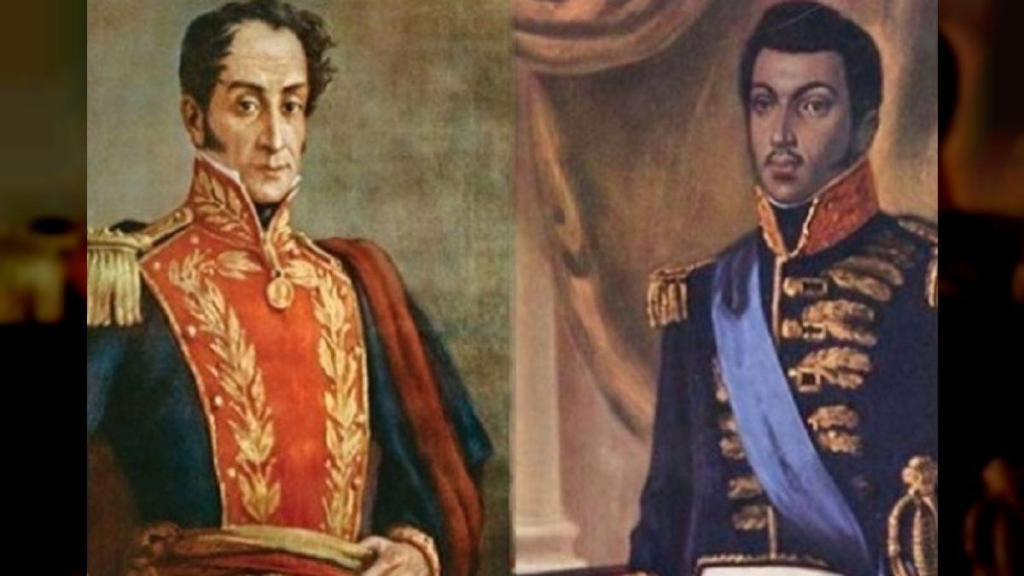
Simón Bolívar and Alexandre Pétion: Artistic depiction of Haitian solidarity with the liberation struggles of Latin America. Historical illustrative image
That support was also tied to a fundamental principle: independence had to go hand in hand with the emancipation of enslaved people.
Haiti was neither an economic nor a military power at the time. It was a nation that understood, through its own experience, what it meant to fight for human dignity. Haiti did not help because it had resources to spare. It helped because it knew the price of freedom.
That solidarity is part of the shared history of our Americas. Haiti’s contribution to the liberation struggles of Venezuela and other South American territories reminds us that the freedom of nations was not always achieved within their own borders.
Two centuries later, history confronts us with a painful paradox. The nation that once offered refuge, weapons, and hope to those fighting to liberate the Americas is now enduring one of the deepest crises in its existence.
Armed groups have spread terror throughout entire communities. Families have been displaced, schools have closed, economic activities have disappeared, and thousands of young people have been forced to abandon their homeland.
Behind the statistics are lives disrupted. There are mothers afraid to send their children to school, business owners unable to open their shops, and entire generations growing up without knowing the peace and security that should accompany childhood.
But Haiti has not lost its dignity. Nor has it abandoned its future.
Amid this tragedy, we Haitians gratefully recognize the solidarity of the peoples of Latin America and the Caribbean who have stood alongside our nation. Every act of cooperation, every humanitarian effort, and every initiative aimed at restoring peace reminds us that our history remains part of a broader American story.
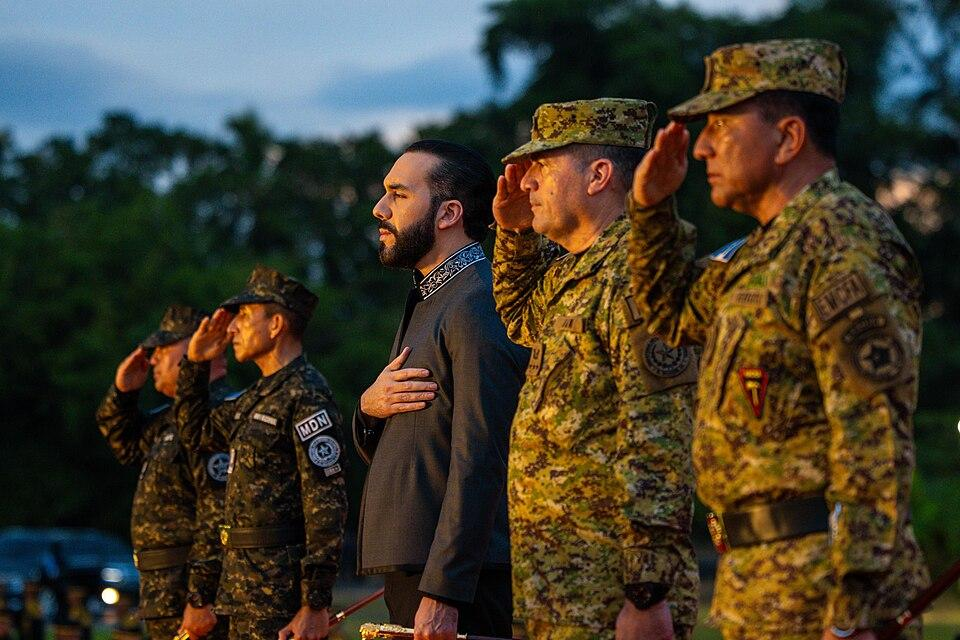
Today, we wish to express special recognition to the people of El Salvador and their president, Nayib Bukele.
El Salvador’s willingness to participate in security efforts in Haiti, as well as the commitment expressed by its president to continue supporting the fight against armed groups, represents a meaningful sign of solidarity for all those who long to see peace restored. It is a commitment that deserves recognition.
We know that El Salvador also understands the suffering caused by criminal violence. Its society has endured decades of gang-related violence, insecurity, and fear. Although the realities of our countries are different, and each experience must be understood within its own context, something deeply unites our peoples: the desire for families to live without terror.
That is why our gratitude does not stem from distant admiration or mere political alignment. It comes from recognizing a people who understand the suffering of another.
We also extend our solidarity to the families of the Salvadoran personnel who went missing during their mission in Haiti. Their situation deeply moves us and reminds us that international cooperation involves human sacrifices that must never be treated with indifference.
The safety of those participating in these efforts, as well as the protection of Haiti’s civilian population, must remain an absolute priority.
We recognize that restoring peace in Haiti requires much more than confronting armed groups militarily. Our country must rebuild its institutions, restore justice, fight impunity, and confront the political, economic, and criminal networks that fuel violence. Haiti must recover its schools, hospitals, and economic opportunities and, above all, restore the trust of its citizens.
International solidarity cannot replace the responsibility of Haitians to rebuild their own nation. But it can accompany us along that path while respecting our sovereignty and dignity.
From Haiti and from Haitian communities established throughout the world, we wish to convey something simple yet profound to the people of El Salvador:
Thank you for not remaining indifferent to our suffering.
Thank you for reminding us that solidarity among the peoples of the Americas does not belong only in history books. Thank you for demonstrating that, even in the darkest moments, one nation can find hope in the outstretched hand of another.
Two centuries ago, Haiti extended its hand to those who dreamed of a free America. Today, when our own freedom is threatened by violence, we welcome with deep emotion the gestures of solidarity from our Latin American brothers and sisters, especially those of the Salvadoran people.
We do not ask other nations to build our future for us. We ask for the opportunity to reclaim it, accompanied by those who believe that no child should grow up under the grip of fear and that no nation should be forced to accept a life held hostage by violence.
President Nayib Bukele, people of El Salvador: from Haiti and its diaspora, please accept our gratitude. In your solidarity, we find a beacon of hope and the gesture of a true friend.
May this cooperation help write a new chapter in the history of our nations. A chapter in which Haiti is no longer remembered solely for its tragedies but once again assumes the place it deserves: that of a free and dignified people, capable of shaping its own destiny.
For nations may endure moments of darkness, but their history does not end there. And the solidarity that once helped liberate the Americas remains one of the forces capable of restoring hope.
Civil Society Organizations of Haiti and the Haitian Diaspora
In collaboration with Haiti Pathway Forward, Inc. (HPF)
Fritz Clairvil, MBA, MPA
President, Haiti Pathway Forward, Inc.
Dr. Daniel Faustin, MD
Chairman, Haiti Pathway Forward, Inc.